
Safe Ways to Release Energy for All Ages At Home
Have you ever noticed that on days when everyone feels a little off, nothing is technically “wrong,” yet the energy in the room feels heavy, buzzy, or chaotic? You might feel irritable for no clear reason. Your baby may be squirmy and harder to settle. Your toddler might be climbing, jumping, or crashing into things with extra enthusiasm.
This is often not a behavior problem or a discipline issue. It is energy looking for a place to go. Yoga helps babies, toddlers, and parents release energy in safe, supportive ways that work with the nervous system instead of against it.
Our bodies are constantly taking in stimulation, emotions, movement, and experiences. When that energy does not have an intentional way to move through us, it gets stored. Eventually, it comes out in ways that feel uncomfortable or disruptive.
Yoga offers a simple but powerful reframe. The body holds what it needs and releases what it does not. Through breath, movement, and connection, we can help energy move through instead of getting stuck.
What this looks like depends on age and stage. Adults, babies, and toddlers all experience pent-up energy differently, and they each need different kinds of support. When we meet those needs with curiosity rather than judgment, regulation becomes more natural for everyone.
Adults: Releasing Energy in Ways That Support the Nervous System
Listening to your energy doesn’t mean you have to do more to release energy.
As adults, especially caregivers, we are often the last ones we check in with. We sit when our bodies want to move. We hold tension in our jaws and shoulders. We breathe shallow when life feels full. Over time, that stored energy shows up as irritability, fatigue, or a sense of being overwhelmed.
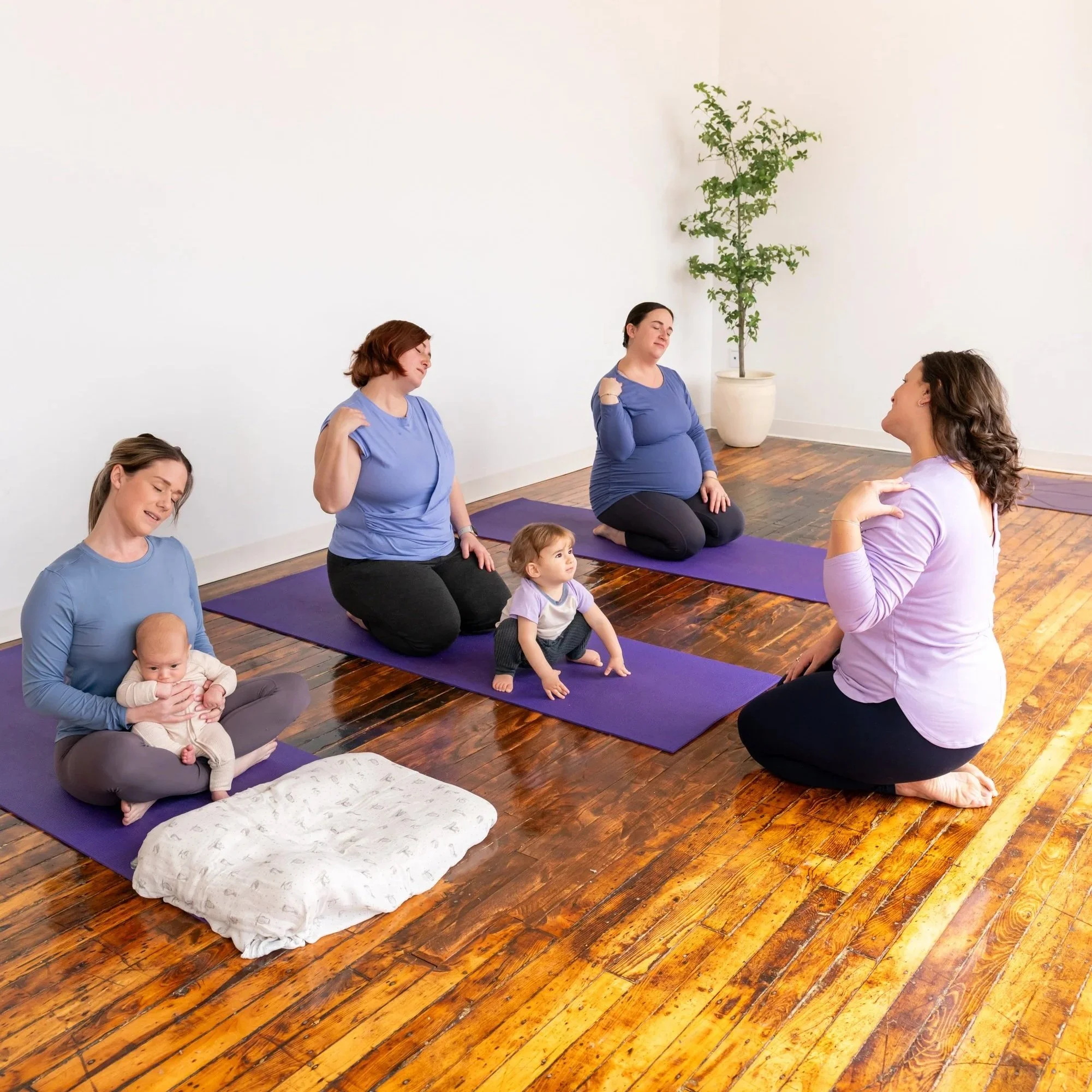
Some days, your body needs quiet release. Breathwork can be incredibly effective when movement feels like too much. Slow, intentional breathing gives the nervous system a signal that it is safe to let go. Even a few minutes of deep inhales through the nose and long exhales through the mouth can soften tension and help energy move without effort.
Other days, gentle movement feels better. Slow spinal movements, shoulder rolls, side bends, or hip circles can create space without overstimulation. This type of movement is especially supportive during pregnancy and postpartum.
And sometimes, your body wants bigger movement. Stronger flows, squats, shaking out the arms and legs, or moving to music can help discharge excess energy that has built up throughout the day. There is nothing wrong with needing more intensity. The key is choosing movement that feels regulating rather than draining.
There is no hierarchy here. Breathwork, gentle movement, and larger movements are all valid. The most supportive option is the one that meets your body where it is in that moment.
Babies: Supporting Energy Release Through Movement and Connection
Babies are not cranky because they are difficult. They are cranky because they do not yet know how to care for their own bodies. That’s where yoga helps!
Babies experience the world entirely through their bodies. They take in sensation constantly, yet they have no way to intentionally release tension on their own. When energy builds up, it often shows up as fussiness, restlessness, or difficulty sleeping.
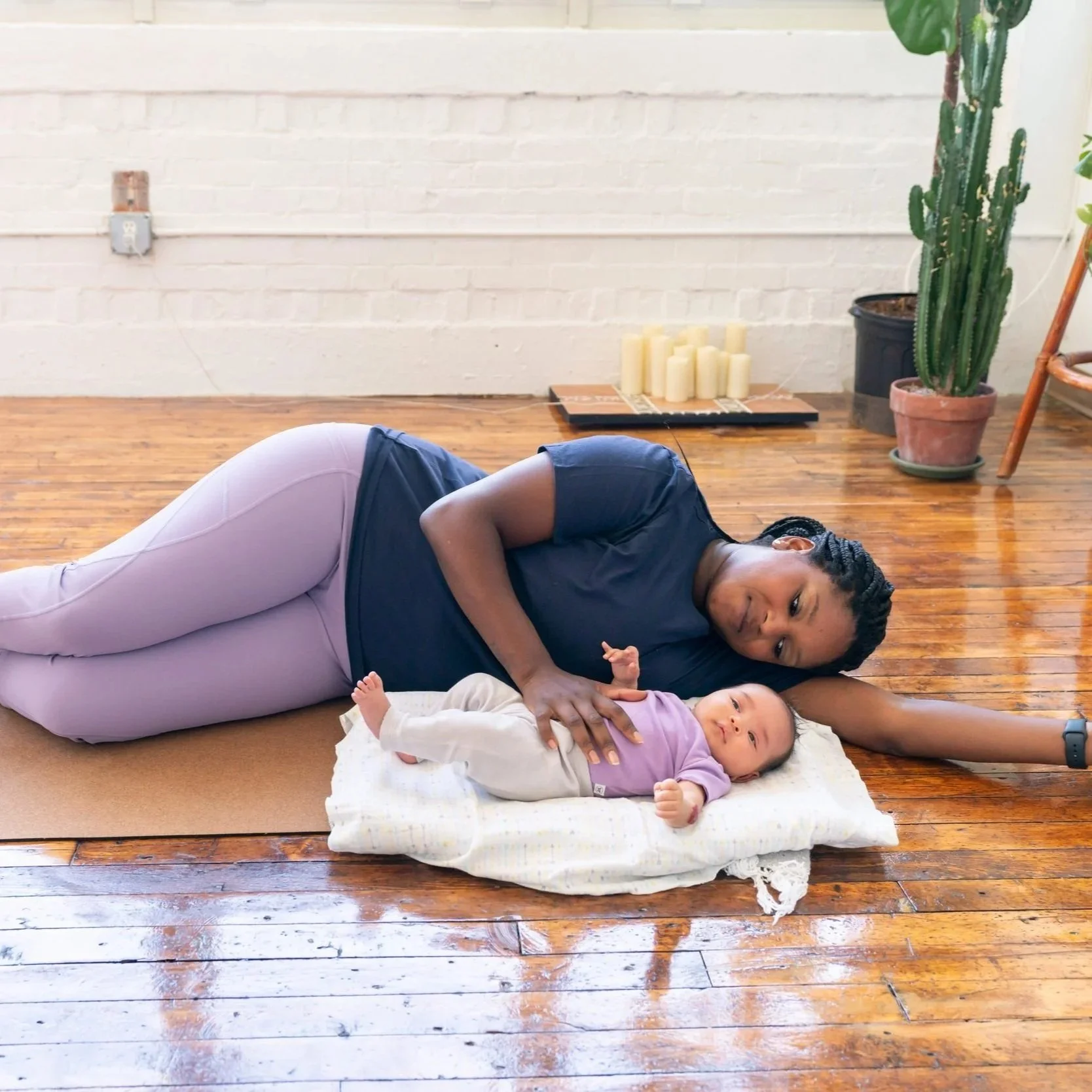
Gentle stretching can help ease physical tension and support digestion and sleep. Simple movements like bicycling the legs, bringing knees toward the chest, slow twists, or gentle hamstring stretches allow the body to release built-up energy in a calm, supportive way.
Movement is not the only piece. Connection plays a huge role in regulation at this stage. Intentional bonding through eye contact, slow focused play, and responsive interaction helps babies feel safe enough to let go of tension. Singing, talking softly, or mirroring their movements creates a sense of attunement that supports nervous system regulation.
When movement and connection are offered together, babies often soften. Energy moves. The body settles. Sleep and digestion improve not because we forced calm, but because we supported release.
Try these stretches at home:
Rolling the hips around in a circle in both directions
Tapping feet on the ground for sensory input
Stretching the arms up, down, left, right, and ending with a peek-a-boo
Sing “Twinkle, Twinkle” while rocking them on their side for bonus tummy-time

Older Babies and Toddlers: Redirecting Energy Instead of Stopping It
For babies and toddlers, yoga helps release energy through stretching, sensory input, and playful movement that feels safe and grounding.
As babies grow into toddlers, their need for movement increases dramatically. Their bodies crave sensory input, yet they are still learning how to meet those needs safely. This is where we often see behaviors like jumping off the couch, climbing furniture, or crashing into things. These actions are rarely about testing limits. They are about unmet sensory needs.
Instead of stopping the movement, we can redirect it.
Many toddlers are seeking vestibular input, which involves movement through space. Others are seeking proprioceptive input, which comes from deep pressure and muscle engagement. Some simply need full-body release through silly or rhythmic movement.
When we understand what kind of input they are seeking, we can offer safer alternatives. Rolling on the floor, spinning gently, pushing against a wall, carrying objects, crawling like animals, or shaking and dancing all give the body what it is asking for
Try these yoga poses for grounding:
Jumping from a squat to a star pose
Frog hops and loud “ribbit” sounds
Downward dog with a tail shake
Try these games for energetic release:
Make them into a burrito. Add toppings, lots of giggles, and roll them in a yoga mat for some gentle sensory input.
Throw stuffed animals onto a couch while practicing a balancing pose.
Have an animal parade around the house (stomping like a dinosaur, tiptoeing like a mouse, crawling like a bear)
Bring Yoga Home
You don’t need a perfect routine or long practice to support healthy energy release. Small moments throughout the day make a big difference.
At home, you can pause and notice when someone feels “not themselves.” Instead of jumping to fix or correct, try offering breath, movement, or connection. A short stretch, a silly movement break, or a moment of focused eye contact can shift the entire tone of the day.
Our yoga classes are designed to support this process at every stage. For adults, classes offer space to release tension through breath and movement that feels supportive rather than demanding. For babies and toddlers, classes provide intentional movement, sensory input, and connection in a developmentally appropriate way.
Yoga is not about being still or doing things perfectly. It is about learning how to listen to the body and trust its wisdom. When we support energy release with curiosity and compassion, regulation becomes something we practice together. And over time, both adults and children learn skills they carry with them long after class ends.
Energy does not need to be pushed down. It needs a way out. Yoga gives us that path, one breath and one movement at a time!
Explore our class options here: